Rob Radtke
Rob Radtke
President, New York
The President’s Blog is about the intersection between faith and global development. This is a place for friends of Episcopal Relief & Development to interact, debate, discuss, question and become more actively involved with our organization.

Haiti: The Three Rs of Disaster

January 15th, 2010 by Rob Radtke


Somehow, I went to bed on Tuesday night in denial.  By Wednesday morning that was over.  I had that awful feeling in the pit of my stomach.  It was the same feeling I had after the tsunami and the same feeling I had after Katrina.   I could tell immediately that this is going to be a long haul for many years: a marathon, not a sprint.


It is important to remember that all disasters have a life cycle:  “The Three Rs of Disasters.”


Right now, we are in the “Rescue” phase.  All hands are on deck to save lives and property.  This phase involves finding and treating the immediate medical needs of survivors and stabilizing ongoing hazards, such as shifting buildings. As such, it is best left to the heavy lifters - government and military search and rescue teams. These groups also have heavy equipment that can clear roads and debris, as well as large specialized operations with mass distribution systems that have pre-positioned warehouses.   The “Rescue” phase typically lasts a week, but with the extraordinary logistical hurdles being faced in Haiti, it may take longer.


The next phase is the “Relief” phase, where the focus is on creating temporary safe and sanitary conditions.  As I saw in Katrina, the church is often one of the first places people go to seek assistance and shelter.  We have already heard that in rural and outlying areas around the earthquake zone, existing clinics are seeing patients who have been able to get out of Port-au-Prince. Some of these clinics are expanding patient care to schools and church buildings.  The “Relief” phase typically lasts a few months.


Finally, we get to the third and final phase: “Recovery.”  During recovery the emphasis shifts to restoring services, rebuilding houses and buildings, and returning, to self-sufficiency.   The Diocese of Haiti has a very large and vibrant social infrastructure and we fully expect that Episcopal Relief & Development will be there for the long haul supporting their important and vibrant ministries. 


The challenge of the “Recovery” phase is that most of the television cameras have moved on, but the human suffering has grown.  It is a chronic state, not a crisis.  However, it is the phase that Episcopal Relief & Development and its partners excel at, because we work with churches that are part of the communities and know the needs best and how to meet them.  This phase will last years.   The unmet needs in a place like Haiti - which already struggles with immense, chronic poverty - will be monumental.


Right now Episcopal Relief & Development is focused on preparing for the “Relief” phase and securing the resources for the “Recovery” phase. 


Please pray for our brothers and sisters in Haiti.


For more information on the Haiti earthquake and on Episcopal Relief & Development’s response, please visit www.er-d.org/HaitiCrisis.

My Crèche Confession

January 6th, 2010 by Rob Radtke
 

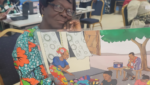
Photo courtesy of United in Christ Church

Okay.  I’ll admit it:  I’m a snob about crèches.  It seems very unlikely to me that Jesus was born under any of the circumstances represented by most of crèches that you see today.  Why do we insist on representing his birth in such improbable settings?

Recently my snobbery was sorely put to the test in Rome.  One of the highlights of Rome this time of year is the myriad of crèches in each church.  In fact, there seemed to be a bit of a competition regarding who could have the most elaborate crèche, although no church dared to take on St. Peter’s Basilica. It stopped just short of a full-blown Disney production.

On New Years Day, more to take refuge from the rain than from a sincere interest, I happened upon an exhibition of over 100 creches. Many embassies in Rome had contributed to the exhibition, as had towns and villages throughout Italy. 

There were numerous crèches from Africa, including one depicting Jesus and the Holy Family as Maasai, and crèches from Latin and South America showing Jesus and the Holy Family as indigenous people.  There were crèches from around Italy showing Jesus as a chubby, cherubic baby of the Renaissance.  There was a crèche showing Jesus and the Holy Family as Eskimos in an igloo attended by flocks of penguins rather than sheep.  I have to say, I loved that one.

Believe it or not, there were even a SpongeBob SquarePants crèche and a sock puppet crèche. 

However, the most moving crèche was from the children of L’Aquila, an Italian town that had been severely damaged during an earthquake last year, showing Jesus and the Holy Family in the midst of the destruction of their village.

That’s when I got it.  A crèche isn’t meant to represent an historical account of the birth of Jesus.  It is meant to show us how God is made incarnate through Jesus in our everyday lives—by being born in the hearts of the children of L’Aquila after an earthquake and in an igloo attended by penguins.

As Christmas gives way to Epiphany, and crèches are packed away until next year, perhaps you’d like to share ways in which God is made incarnate in your life?

A Tough Year

December 28th, 2009 by Rob Radtke

As 2009 draws to a close, one can almost hear the sighs of relief.   The financial crisis has affected millions here in the U.S. But even in the midst of it, I’m reminded of the vital support we get from the men, women and children of the Episcopal Church.  For without that faithful support, the things left undone would be even more sobering than they already are. 

As bad as things were here, it is always those living in the poorest parts of the world who are hit hardest. We are seeing firsthand how the crisis is affecting them—and we are also experiencing the impact on our work. Looking at some of the year-end reports from our program partners, I pray that things will get better soon.

Just to give you a sense of what has happened in our Latin America programs:

• In 2008, our program with an ecumenical partnership in Haiti planted almost 1,000,000 trees.  However, for 2009, we are expecting to plant half that amount: around 500,000.

• In 2008, as part of the Haitian church’s social safety net, our school canteen feeding program for young children in primary schools fed approximately 1,500 children.  However, for 2009 we will feed about 1,000 children, and we expect to have to decrease the amount further in 2010.  That is 500 children who will not receive a hot meal in school.

• The number of latrines built by communities in Nicaragua is half what it was for 2008 due to both a decrease in budget and a concurrent increase in the cost of building materials.  We had seen over the past two years a steady decrease in the number of people with diarrhea in areas where our program is implemented.  However, we are afraid that with fewer sanitation facilities such as latrines, wells, and washing stations built by the communities, we may see diarrhea rates increase. This is particularly worrisome and dangerous, as dehydration and diarrhea are among the top killers of children under five in developing countries.

Poverty is an immediate and critical problem for hundreds of millions of people around the world. Lower or delayed donations in 2009 for Episcopal Relief & Development and other humanitarian organizations meant that the poor of the world measured the economic crisis not in dollars, but in meals foregone, increases in preventable disease and—almost certainly—lives lost.

Those of you who support our work have given sacrificially to Episcopal Relief & Development and I am deeply grateful.  Had you not supported us, the things left undone would have been even more catastrophic.

Christmas 2009

December 21st, 2009 by Rob Radtke

As the final darkest days of the year draw around us and Advent comes to a close with Jesus’ birth, I found myself lingering over this wonderful prayer by Mary C. Earle in San Antonio, Texas from Lifting Women’s Voices:

O Come Emmanuel

O come, O come Emmanuel
Come now to us, in your many disguises
Come now to us, in every language
Come now to us, in every culture

Come now to us, in every color
Come now to us, that every moment may be pregnant with your advent
Come now to us, that we may breathe and labor and deliver you
Here, now, in our midst and in our souls
And let us say:  Amen.

May the baby Jesus live in your soul this Christmastide and for ever-more.

Who Knew?

December 4th, 2009 by Rob Radtke

Not long after my wife and I joined our church here in New York City (now nearly 18 years ago), I remember being stunned during the annual stewardship campaign when fellow members came to the lectern to give personal, and many times emotional, testimonials about how giving transformed their lives.

My wife, who was raised as a Baptist, reacted along the lines of “It’s about time!”  My own upbringing as a cradle Episcopalian—and I mean this literally, as I was baptized at Episcopal Divinity School where my father was a seminarian—had not prepared me for the open conversation about money.  I just looked at my shoes.

One Sunday, a tall and beautiful member of our parish stepped to the lectern to speak.  I didn’t know the woman well, but I’d certainly noticed her (who wouldn’t have?).  I decided this time I wouldn’t look at my shoes.

She told a very affecting story of how giving to our church had transformed her life and ended with this line: “Don’t just give until it hurts, give until it doesn’t hurt anymore.” 

That sentence has stayed with me ever since, because it gets at a fundamental truth about giving.  The more you give (and I don’t mean necessarily money), the better you will feel.

It turns out that science backs this up.  An article in the Health section of the New York Times on Tuesday describes how helping others actually leads to biological changes that increase emotional and physical well being:
http://www.nytimes.com/2009/12/01/health/01well.html?emc=eta1

It ends with a wonderful quote from Dr. Stephen Post:  “To rid yourself of negative emotional states you need to push them aside with positive emotional states.  And the simplest way to do that is to just go out and lend a helping hand to somebody.”

In what ways are you sharing your gifts with others during this season of giving? How is it making a difference in your life?


President’s Blog is proudly powered by WordPress
Entries (RSS) and Comments (RSS).

Episcopal Relief & Development
uses your financial gifts in the
most effective ways possible to serve
and support people suffering worldwide.
More information