Become a Monthly
Giving Partner ›

Sudan

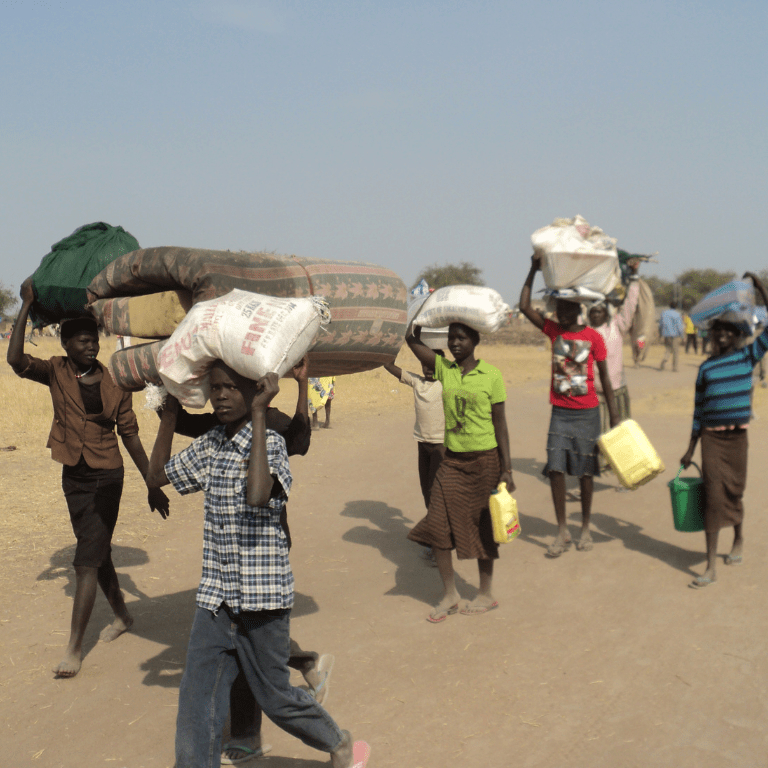
Northern troops invaded Abyei on May 21, 2011, taking over the city and causing an estimated 20,000 Southern Sudanese residing there to flee. This unrest in Abyei, which is situated on the border between Sudan and the newly independent state of South Sudan, has raised concerns locally and internationally about a possible reprise of the civil war that ravaged the country for decades between 1955 and 2005.  Episcopal Relief & Development is supporting the Episcopal Church of Sudan as it responds to the humanitarian needs of internally displaced people from Abyei.

On January 9, 2011, Southern Sudan participated in a referendum that concluded the five-year Comprehensive Peace Agreement, which was signed in 2005 after close to five decades of civil war. It is widely expected to result in the creation of a new, independent nation in Southern Sudan. This new state will be endowed with rich resources – oil, abundant fertile land, timber and its people – but the long civil war has left the country with virtually no infrastructure and very limited healthcare and educational services.

Episcopal Relief & Development supported the efforts of the Episcopal Church of Sudan (ECS) to hold public meetings about the referendum. These meetings, held by ECS’ diocesan bishops, promoted the value of registering and voting, and helped local residents understand the process and possible outcomes of the vote. Creating clarity was important to ensure widespread participation, especially in areas such as Western Equatoria, where 170,000 people have been displaced by the terrorist activity of the Lord’s Resistance Army.

Sudan’s national infrastructure is weak. With few roads and limited mobile phone and radio coverage, it was challenging to get out information about the referendum to eligible voters. The Church in Sudan is one of a small number of organizations whose local connections are both deep and wide, giving it the unique ability to contribute in civic education and peace building in this exciting but uncertain time.

The Church covers the entire country, but is mainly concentrated in the predominantly Christian south, where 20 of the Church’s 24 dioceses are located. SUDRA (the Sudanese Relief and Development Agency), the relief and development arm of the Church in Sudan, was established in 2006. Its mandate is to build the capacity of the Church and facilitate diocesan projects that serve and improve the lives of those living in poverty.

Alleviating Hunger and Improving the Food Supply

  • approximately 24 agriculture resource agents will be trained over the next three years (one for each diocese)
  • following a three-month training course, each resource agent will establish a model garden to demonstrate agricultural techniques
  • the agent will train communities in sustainable land management, focusing on household gardens which can provide families with nutritious food and needed income

Creating Economic Opportunities and Strengthening Communities

  • vocational training center for men and women in the Diocese of Lainya
  • need for skilled construction workers and carpentry in area is high
  • new construction will help build local infrastructure and provide income for workers

Responding to Disasters and Rebuilding Communities

  • preparing SUDRA to meet uncertainties that face Sudan
  • training of staff to include needs assessment, identifying vulnerable individuals or communities, organizing logistics, utilizing networks for response when needed
  • equipping SUDRA to mobilize wider emergency response
  • empowering communities to create plans to deal with catastrophic events

Episcopal Relief & Development uses your financial gifts in the most effective ways possible to serve and support people suffering worldwide. More information