Become a Monthly
Giving Partner ›

Stories from the Youth Brigade - Confronting Gender-Based Violence

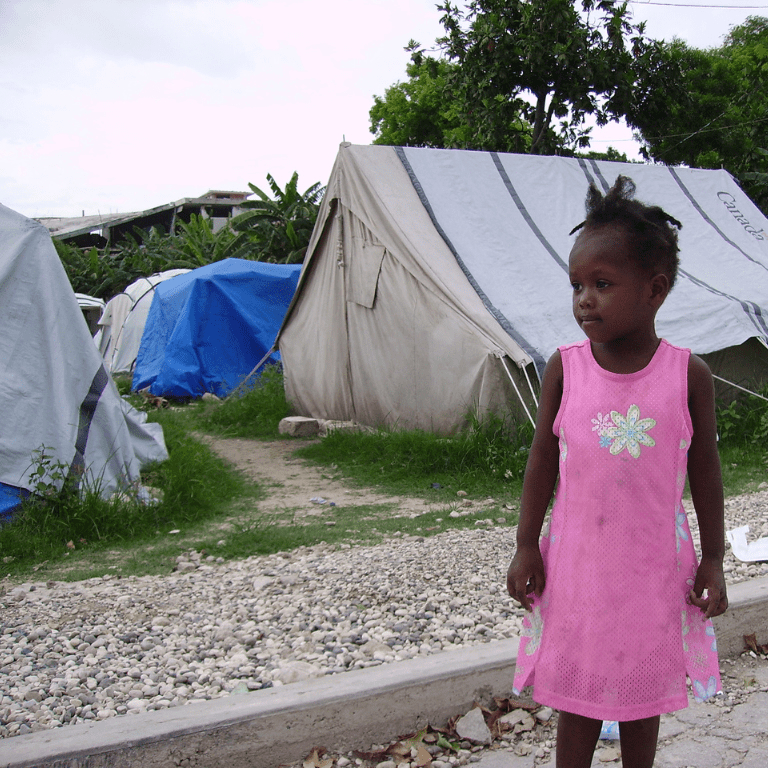
To promote a culture of peace that both protects and empowers those displaced by the January 2010 earthquake and currently living in tent camps, CEDDISEC, with support from Episcopal Relief & Development, has united a Youth Brigade of 18 university students to address the high incidence of gender-based and sexual violence (GBV) in four urban camps.

Beginning in June 2011, CEDDISEC’s Youth Brigade received training in gender-based violence issues from prominent Haitian gender-rights advocates, lawyers, and priests. Then, working with camp leaders, the Youth Brigade conducted baseline surveys on the nature and frequency of violence and gender-based violence incidences in the four camps; this included interviews with camp leaders, women residents, and youth. In July the education program was officially launched through a series of camp presentations involving skits and music that the Youth Brigade members wrote themselves.

Here are some of their stories.


Jean Marcelin
26 years old, student of UNEPH, fourth year, faculty of Administration.

Jean Marcelin was part of the Youth Brigade formed by CEDDISEC to conduct prevention education and distribution activities during the 2010 cholera epidemic. They worked in 19 camps throughout the greater Port-au-Prince area. Students in the Brigade first became aware of the level of violence occurring in the camps when, during a cholera education event, they met a 14-year-old girl who was pregnant from an act of sexual violence.

“Violence exists in many different forms,” explained Jean Marcelin. “It exists overtly in the form of rape, and more discreetly in the form of control and isolation.” While visiting the camps with the new GBV-focused Youth Brigade he was pained by another young woman’s tears as she shared her story. Despite her desire to learn a trade and find a job, her husband insists she play a more traditional role and remain at home cooking, cleaning, doing laundry and caring for their two children.

Jean Marcelin, like several others in the Brigade, is an artist – a poet. Motivated by his encounter with the young woman, he has used his gift to write a poem that his fellow Brigade members have, in turn, put to song. The poem speaks about the need to stop gender-based violence. But it also speaks about the need for people to respect one-another, which means sharing and contributing to each other’s growth, hopes and dreams.


Darline
29 years old, student of UNEPH (withdrew because of circumstances caused by the January 2010 earthquake, intends to re-enroll next session to complete 4th year, faculty of Administration).

Darline joined the Brigade with a desire to help women, given her acute awareness of the high incidence of violence that women experience in Haiti. During her baseline interviews with women in the camps she repeatedly felt discouraged, as it appeared that the women had much to say but lacked the courage to say it. She hopes that through the Brigade’s awareness-raising events, and their efforts to support the youth of the camps in creating their own Brigades, women will begin to feel more secure about speaking out against the violence they are experiencing.


Nelson
23 years old, student of UNEPH in his first year, faculty of Administration.

Nelson initially joined the Brigade with the intention of earning a bit of money to help him pay for his studies. It was only while conducting baseline interviews in the camps that he became committed to its mission to fight gender-based violence. During his initial interviews, Nelson met a girl not much different in age than him. He realized right away that while young, she was very mature and intelligent, yet also afraid. As she described her life living in the camp, Nelson began to realize the many facets of violence that exist – physical, verbal, psychological – and he began to realize how this young girl’s life was being limited and “hurt” by the violence around her. Nelson hopes that the work that the Brigade is doing will encourage more dialogue about gender-based violence and the pain it causes, and that this awareness will spur other youth in the camps to take action for the creation of a peaceful and respectful environment where there is “no more fear.”


Wilda
22 years old, student of IGC - Institute de Gestion et de Comptabilité (Institute of Management and Accounting), in her first year, studying to be an Accountant.

Wilda joined the Brigade because she has always been interested in working with youth. She has been a leader for many years in her youth group at the Episcopal parish of St. Simeon in Croix des Bouquets.

Although she had been aware of the negative impact gender-based violence can have on women’s mental and physical health, it was not until she started visiting homes with the Brigade that she recognized how profoundly it can hurt the whole family. During her baseline interviews with women in the camps, Wilda heard a story of a husband who physically abuses his wife when he is mad with her. At the same time, she learned that the same man when he is frustrated also physically abuses his children. Unfortunately, when the wife tires to intercede, he again turns his aggression toward her.

Wilda feels that it is the responsibility of the Brigade to open up dialogues not only with women, but also with men. While she feels she can give advice to women, she does not feel that she can have a positive impact on the situation if the men are not also engaged.

“Helping couples to identify the cause of their problems is the second step. As a Brigade, we must help them with the first step – to have open, respectful, two-way communication.”


Marie Carmel
28 years old, 2011 graduate of the Episcopal University in Haiti (UNEPH) Faculty of Theology, and a 2011 graduating seminarian from the Episcopal Theological Seminary in Port-au-Prince.

When I am working with CEDDISEC’s Youth Brigade, I am touched by the strength I see in the women I meet in the camps. I am touched by their courage to deal with the difficult situations they are in, while working to make themselves and their families comfortable.

Being with the Youth Brigade has given me another view of people in Haiti. I feel like I have been inside for too long. I have been living with enough, which is a life so different from that which I encounter in the camps. Working with the Youth Brigade has given me the opportunity to learn so much. Haiti has many things to think about if it wants to help its people. I realize that in the future, as a priest, I will have a big job to minister to both the spiritual and physical needs of people.

This past spring, with support from Bishop Catherine Roskam of the Episcopal Diocese of New York, I attended the Commission on the Status of Women (CSW) at the United Nations in New York, alongside other Episcopal and Anglican women. My participation made me recognize that I had many things inside me; it made those things wake up.

It was during this meeting that I began to develop the dream that when I return to Haiti I can do more for women, using the information I have learned. I am grateful to Bishop Roskam for the invitation to participate in the CSW, and for the opportunity I now have to be with CEDDISEC’s Youth Brigade. I am grateful for the opportunity to use what I have learned.

All around the world women are waking up and working together to make things better, and now I am a part of it.

Episcopal Relief & Development uses your financial gifts in the most effective ways possible to serve and support people suffering worldwide. More information